
How to Find Who Owns a Rensselaer County Property
Rensselaer County public-record detail
- Rensselaer County public-record detail
- Rensselaer County public-record detail
- Rensselaer County public-record detail
- Rensselaer County public-record detail
Where Rensselaer County Owner Information Comes From
Rensselaer County public-record detail
| Source | Owner Info It Gives | Access |
|---|---|---|
| Assessor / tax roll | Rensselaer County public-record detail | Rensselaer County public-record detail |
| Recorder deed index | Rensselaer County public-record detail | Rensselaer County public-record detail |
| Secretary of State | Rensselaer County public-record detail | Rensselaer County public-record detail |
| GIS parcel viewer | Rensselaer County public-record detail | Rensselaer County public-record detail |
Rensselaer County public-record detail
What "Who Owns This Property" Cannot Tell You
Rensselaer County public-record detail
Lawful use. Rensselaer County public-record detail
Move from Address to the Rensselaer County Property Owner
The official PROS filter page supports the address, owner, parcel, sale and value clues used to identify the assessment record.
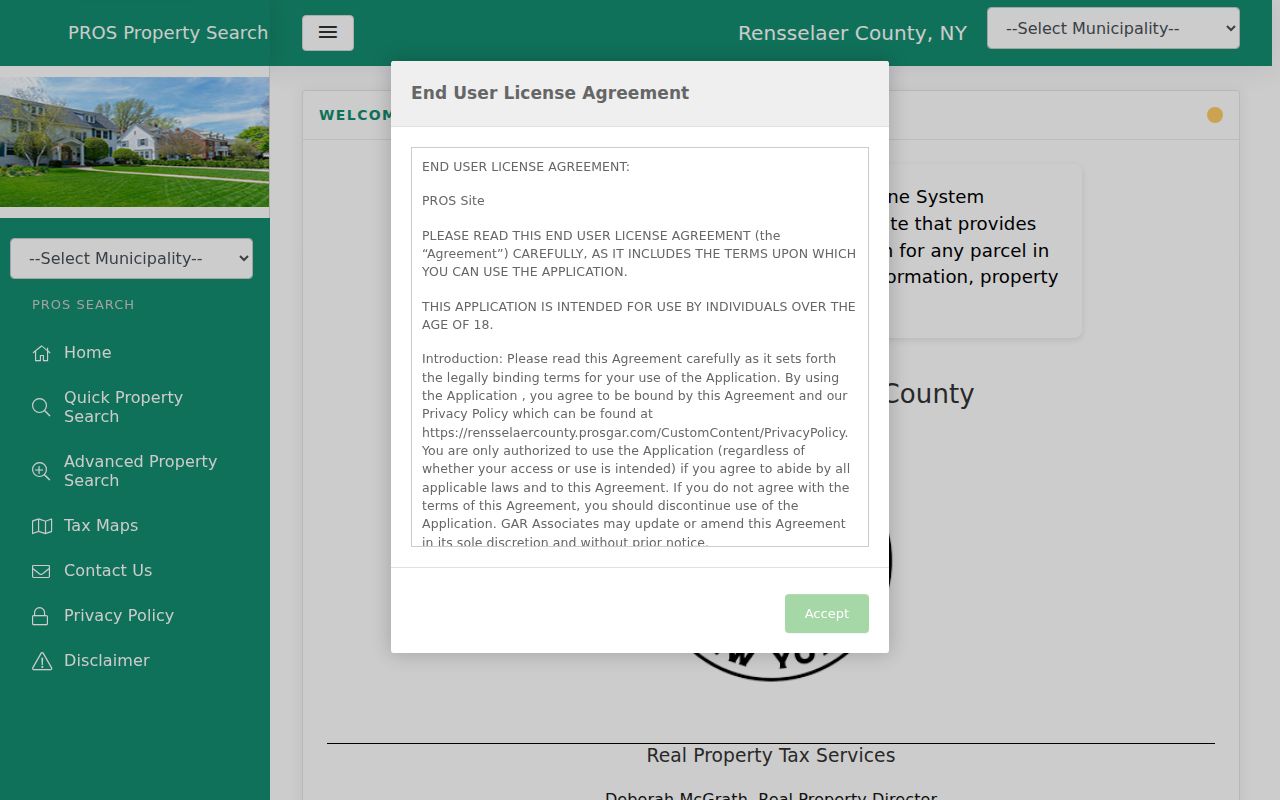
Once the municipality and SBL match, confirm the owner of record in the newest SearchIQS deed.
Follow the Address to a Stable Parcel Identifier
A stable parcel identifier comes first. Finding who owns a Rensselaer County property does not start with a name. Begin in PROS by selecting the assessing municipality. Then test the street address and copy the SBL, SWIS and account number it returns. The countywide municipal selector covers both City of Troy and City of Rensselaer. A postal city alone is not enough. Mailing geography and municipal boundaries do not always line up.
When an address fails, strip apartment or directional details and try a historic street or place name. The municipality's PDF tax-map sheet can also help. Greenbush and Bath appear in older City of Rensselaer records. Lansingburgh marks older Troy land. These variants help you locate the parcel. They do not identify its owner by themselves.
Read the Assessment Owner without Overstating It
The assessment roll carries a current owner field for tax administration. The 2023 roll also separates the owner mailing address from the property location. Surrounding fields include the roll year, taxable-status date, SWIS, SBL, account, school district, parcel size, land and total assessments, exemptions and taxable values. Capture them all. They separate a reliable parcel match from a same-name coincidence.
Key distinctions. The owner of record is the party carried on a particular record. Situs is the property address. A mailing address is simply the notice destination. SBL is the section-block-lot key used across local systems.
That mailing destination may belong to a nonresident owner, a trustee, an estate, a company or a tax-bill agent. It is not proof of where a person lives. Ownership concerns an interest in land, not occupancy.
Confirm Who Owns the Property in SearchIQS
The County Clerk's deed index provides the recorded transfer evidence. Deed images are online from May 30, 1980 forward. Mortgages date from 1989 forward. Grantee index information from 1973 through 1989 can exist without an online image. Search the assessment name as a grantee. Find the newest plausible deed. Then compare its legal description, recording date and prior deed reference against the subject parcel.
- Copy the municipality, SWIS and SBL from the assessment result.
- Record the owner name exactly, including trust or entity wording.
- Search the name in SearchIQS and narrow by instrument and date.
- Match the deed description or parcel reference to the land.
- Explain any difference by comparing deed and roll dates.
A newly recorded deed can postdate the current roll. An assessment may also shorten an entity name. State the source and date of each result. Never merge two snapshots into one unsupported answer.
Handle LLC, Trust, Estate and Life-Estate Results
When the owner field names a limited-liability company or corporation, the New York Department of State business database can clarify the entity's exact filed name. It cannot prove ownership of this parcel; only the land record does that. If a trustee appears, keep that capacity in your search. A personal name alone may pull unrelated deeds.
Estate and life-estate interests need the same care. WebSurrogate offers name, file and old-index search modes. An executor deed or probate decree can explain a transfer. That transfer may look nothing like a market sale. For older research, Hart Cluett holds county Surrogate records from 1791 through 1915. Match every probate lead to the property description and the deed chain's parties.
Know What an Owner Search Cannot Prove
PROS, SearchIQS, tax records and maps document public-record facts. None alone is a title opinion. A tax map is not a survey. A property-fraud alert is a recording notification, not proof of ownership. The county warns that same-name alerts can occur. Mortgages, easements, judgments, lis pendens and estate interests may all affect the parcel. This can hold true even when the roll shows one tidy owner line.
Use owner information for property diligence, boundary work, tax questions, house history or civic research. Never use it to harass, threaten or track a person. When legal ownership matters, take the deeds and encumbrances you identified to a qualified title professional or attorney.
Use Sale Records as a Dated Cross-check
New York SalesWeb and the sale fields in PROS offer another dated clue. Use them once the parcel is identified. SalesWeb generally supports a transfer review reaching back roughly ten years. Compare its sale date and reported price with the recorded deed. A blank price does not mean no transfer occurred. Gifts, estate transfers, related-party deeds and other non-arm's-length transactions may appear differently across systems.
The deed's consideration language, the RP-5217 sale report and an assessor's comparable-sale field have related purposes. But their purposes are distinct. Record which source supplied each fact. A consistent parcel, grantee and date strengthens the ownership match. A price difference is a reason to inspect the underlying documents. It is not a reason to alter the owner name.
Research note: Save the search date and official source with every ownership conclusion, since public portals refresh on different schedules.
For a pending purchase, estate matter or boundary dispute, use the portal findings to identify documents for professional review.