
What Rensselaer County Property Tax Records Show
Rensselaer County public-record detail
| Field | What It Shows | Where |
|---|---|---|
| Assessed value | Rensselaer County public-record detail | Rensselaer County public-record detail |
| Market / appraised value | Rensselaer County public-record detail | Rensselaer County public-record detail |
| Exemptions | Rensselaer County public-record detail | Rensselaer County public-record detail |
| Tax bill & status | Rensselaer County public-record detail | Rensselaer County public-record detail |
| Taxing districts | Rensselaer County public-record detail | Rensselaer County public-record detail |
Rensselaer County public-record detail
Looking Up a Rensselaer County Tax Bill
Rensselaer County public-record detail
- [STEP 1 - search the Rensselaer County public-record detail by address or parcel]
- Rensselaer County public-record detail
- Rensselaer County public-record detail
- Rensselaer County public-record detail
- Assessed value
- Rensselaer County public-record detail
- Mill rate / levy
- Rensselaer County public-record detail
- Homestead exemption
- Rensselaer County public-record detail
- Tax lien
- Rensselaer County public-record detail
Appealing a Rensselaer County Assessment
Rensselaer County public-record detail
Appeal window. [1-2 sentences - Rensselaer County assessment appeals must be filed by Rensselaer County public-record detail with the Rensselaer County public-record detail; missing the window means waiting for the next cycle.]
TCS Status and the Troy Exception
Delinquent taxes in Rensselaer County run through Total Collection Solution. The system wants the punctuated SBL and the SWIS code before it returns anything useful. Once results appear, spread them out. Look at the jurisdiction line, the FLAGS, the Payments and the LINES entries rather than grabbing a single balance. The county's own delinquent property-tax instructions lay out that workflow in full.
Two limits matter here. The City of Troy sits outside this county delinquency route. Village taxes can be left off the county result. Also keep three records separate. The current assessment, the tax bill, and delinquent status each carry their own dates.
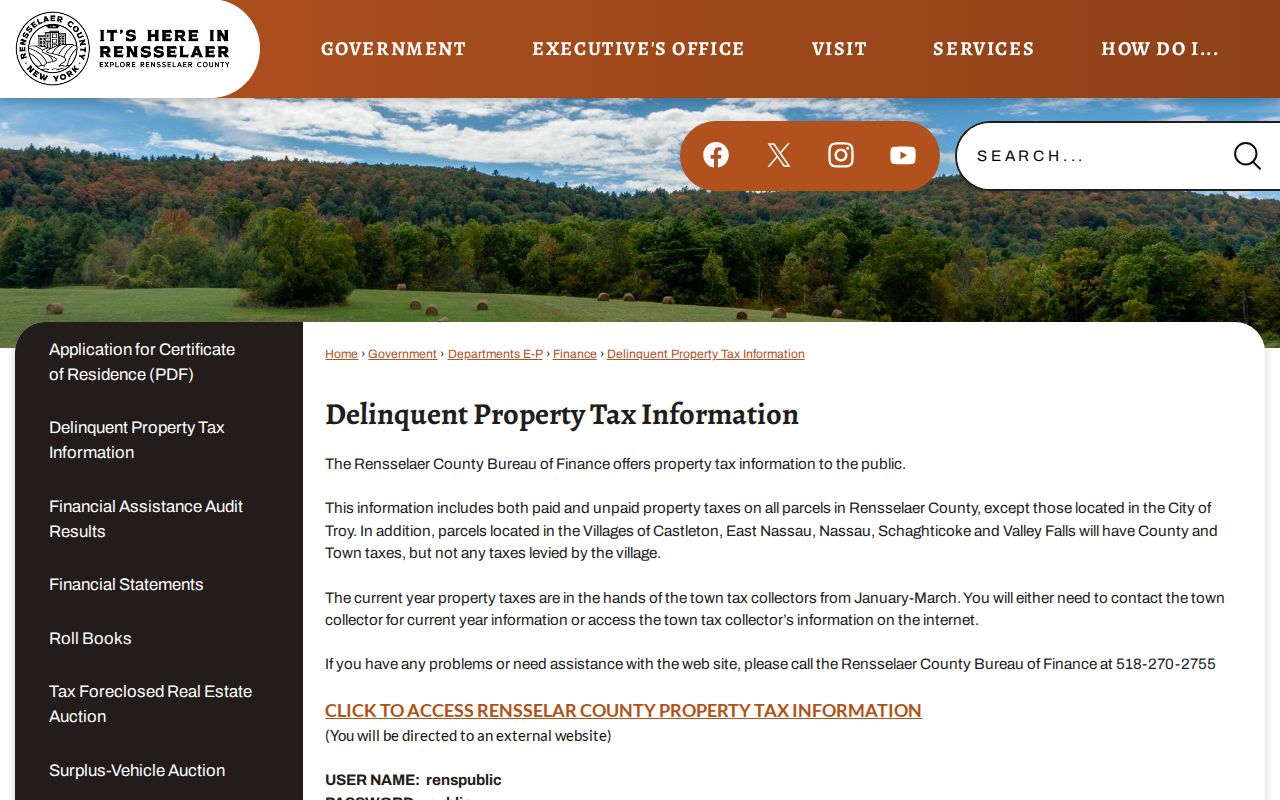
The county's delinquent property-tax page spells out the identifiers you need before logging into the tax-status system. It also flags where a city or village follow-up is required.
Separate Assessment Records from Tax Status
Three records answer three different questions. PROS and the annual roll describe the assessed parcel itself. The tax bill applies rates and exemptions for one stated year. TCS reports delinquent status keyed to the SBL and SWIS, broken into FLAGS, Payments and LINES.
Write each one down separately with its date. Collapsing them into a single balance invites errors.
| Field | What It Shows | Where |
|---|---|---|
| Land and total assessment | Assessed components | Final roll |
| Exemptions | Reductions applied to taxable value | Roll |
| Bill year and levy | Annual charge | Tax bill archive |
| Payments and lines | Portal status detail | TCS |
Use SBL and SWIS in the TCS Workflow
Start with a verified assessment result. Copy the punctuated SBL and SWIS exactly, and enter them in the county tax-status route. Confirm the jurisdiction that comes back. Then read the flags, the individual lines and each payment entry alongside its dates. A near-match parcel number from a different municipality proves nothing.
Remember the gaps in the county system. The instructions exclude the City of Troy from this delinquency portal. Village taxes can be omitted. So a blank county result does not mean nothing is owed. Follow the city or village route tied to the parcel instead.
Read the Roll Dates before Comparing Years
The 2023 final roll works from a July 1 valuation date. It also uses a March 1 taxable-status date. Those dates govern everything else on the page. The roll also lists owner, mailing address, property location, SWIS, SBL, account, school district, parcel size, land assessment, total assessment and exemptions. It also lists taxable values. Record the year and both dates with every number you copy.
Timing explains many apparent mismatches. A deed recorded after the taxable-status date can show up elsewhere first. So can an improvement finished later. That kind of difference is not an error. Compare like fields across final rolls, and label any tentative-roll figure as tentative.
Troy and Rensselaer Follow Local Assessment Paths
Troy keeps its own assessment machinery. Tentative and final rolls, plus a local grievance calendar, all sit separate from the county TCS route. The City of Rensselaer assessor maintains roughly 3,300 parcels and posts city roll material. County records supply the deed chain and wider tax context.
Jurisdiction follows the municipality shown by PROS and the SWIS, never the mailing city. This matters most for 12144 or Troy mailing labels, which settle nothing by themselves.
Exemptions Change Taxable Value, Not Title
An exemption trims the taxable amount. It leaves total assessment and ownership exactly as they were. Write down the exemption code or description shown on the roll. Ask the assessor about eligibility and application material. Read no more into a person's circumstances than the official record itself states.
Each question has its own record. For value, compare land assessment, total assessment and taxable value. For ownership, go back to the newest deed. For payment status, use the correct tax collector and year.
Assessment Review Uses the Local Filing Route
New York grievance guidance sends an owner to the local assessor and the local board. Confirm your municipality's tentative-roll date, its grievance deadline, the required form and any supporting evidence. Troy's published calendar governs Troy alone, not another town and not the City of Rensselaer.
Keep the two fights separate. A review challenges the assessment, not the deed chain. So organize comparable sales, property facts and claimed errors apart from tax payments. A successful grievance can shift assessed or taxable value. The recorded owner stays the same.
Annual Bill Archives Preserve Prior Tax Years
Rensselaer County posts archives covering county, city and village bills from earlier years. Pick the year and the taxing jurisdiction. Only then compare any prior amount with a current portal figure. One parcel can carry county, municipal, school and village charges on different schedules. A single archived bill is never the whole tax history.
Save what the document itself shows. That means the bill year, parcel identifier, owner label, assessed or taxable figure, and payment instructions. Then set it beside the same year's final roll. That habit keeps a later reassessment from being read backward into an old bill. It keeps exemption changes from being read backward too.
Delinquency, Foreclosure and Tax Sale Are Different Stages
A delinquent line in a collection system shows debt, not destiny. It does not mean the parcel was foreclosed or sold. Foreclosure creates a court record, and a completed conveyance creates a recorded deed. Search New York court routes and the County Clerk only when the tax status or an official notice points that way.
One Rensselaer foreclosure case, U.S. Bank v. Lynch, carries county index EF2008-225743 and NYSCEF document references. The court index tells one part of the story. The filing documents and the recorded land instruments each carry their own weight. It shows why these three must stay distinct. Never stretch one case's posture or outcome onto another parcel.
Tax Maps Help Confirm the Assessment Parcel
The county tax-map index organizes PDFs by municipality. Use the verified SBL to locate the subject sheet when a bill or roll address is unclear. Map adjacency and parcel outlines can confirm that the record concerns the intended land, but the map does not establish a surveyed boundary or legal title.
Troy's maps are split among three published ranges, while City of Rensselaer research should retain SWIS 381400. Carry those jurisdiction clues into every tax request. If a parcel crosses a sheet edge, follow the referenced sheet rather than assuming the visible outline is complete.
Document Corrections with the Custodian
A wrong owner name, mailing address, exemption, or parcel detail usually has a paper trail. Start by noting the roll and tax year, then contact the local assessor. That office maintains the assessment facts behind the parcel record. Payment and delinquency questions belong to the collector for that jurisdiction and year. Ownership on a recorded deed goes to the County Clerk instead.
A portal discrepancy is rarely fraud. Annual roll lag can explain a temporary mismatch in Rensselaer County records. So can a recent deed, an exemption update, or a slow payment posting. Check the dates and each office's role before drawing conclusions. Keep the original result and the custodian's response. A clear correction trail helps if the issue resurfaces.