
How a Rensselaer County Property Search Works
Rensselaer County public-record detail
- [STEP 1 - enter the address in the Rensselaer County public-record detail]
- Rensselaer County public-record detail
- Rensselaer County public-record detail
- Rensselaer County public-record detail
- Rensselaer County public-record detail
What a Rensselaer County Property Record Shows
Rensselaer County public-record detail
| Owner of Record | Rensselaer County public-record detail |
|---|---|
| Situs / Mailing Address | Rensselaer County public-record detail |
| Parcel Number (APN) | Rensselaer County public-record detail |
| Assessed / Market Value | Rensselaer County public-record detail |
| Legal Description | Rensselaer County public-record detail |
| Last Sale | Rensselaer County public-record detail |
Rensselaer County public-record detail
Search by Address, Owner, or Parcel
Rensselaer County public-record detail
| Search Key | Best For | Where It Works | Watch Out |
|---|---|---|---|
| Address | Rensselaer County public-record detail | Rensselaer County public-record detail | Rensselaer County public-record detail |
| Owner name | Rensselaer County public-record detail | Rensselaer County public-record detail | Rensselaer County public-record detail |
| Parcel number | Rensselaer County public-record detail | Rensselaer County public-record detail | Rensselaer County public-record detail |
Not a title search. Rensselaer County public-record detail
PROS Advanced Fields for a Rensselaer County Property Search
A Rensselaer County property search starts with the assessing municipality. Pick the city, town or village first. From there, try the situs address, an owner name, or the account or SBL. The advanced route adds filters for sales, values and property characteristics. Keep two addresses straight. The owner mailing address is where assessment notices go. It may belong to an agent, estate, trust or business rather than the site itself. A good research note preserves the municipality, SWIS, punctuated SBL, and account number. Add the roll year. Note the date the result was viewed.
The official advanced-search screen shows each filter group in one place.
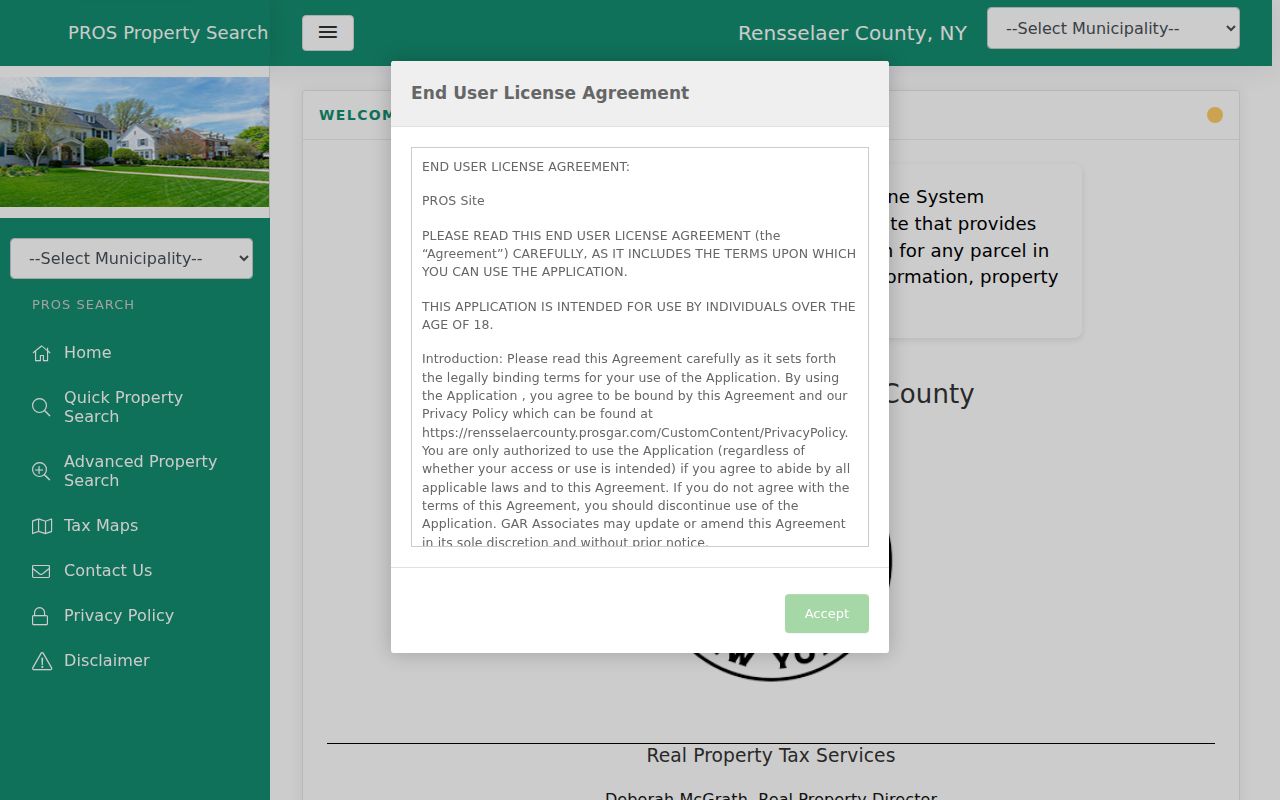
Treat that screen as a field guide rather than proof of title. Confirm any promising result against the newest County Clerk deed before relying on it.
Cross-check the Roll with Deeds and SalesWeb
The 2023 final roll carries a deep set of fields. Expect the valuation date, taxable-status date, SWIS, SBL, owner and owner address, property location, school district, parcel size, grid, account number, land assessment, total assessment and exemptions. Taxable values round out the set. Those fields answer assessment questions. For who actually received recorded title, the SearchIQS deed index is the right tool. SalesWeb adds another transfer check reaching back roughly ten years.
Be careful comparing money fields. Sale price, deed consideration and an assessor's comparable-sale field describe related but not identical facts. That is especially true when a transfer was not arm's length. If a new deed postdates the roll, record both dates in your note. If an address search fails, try street-name variants, the map sheet and adjacent SBLs. Troy and the City of Rensselaer keep their own PROS entry points. So reconcile any countywide result with the correct municipal roll instead of treating it as final.
Start a Rensselaer County Property Search by Municipality
The municipality controls the assessment roll, the SWIS and the tax-map set. Always select the city, town or village before trusting an address result. The county PROS selector includes City of Troy and City of Rensselaer. Both cities also offer their own entry routes. Copy the municipality, SWIS, punctuated SBL and account from any confident result.
Postal geography can mislead. A mailing label may not identify the assessing jurisdiction. Older records may use Lansingburgh, Greenbush or Bath. When a street search fails, shorten the address. Try an older place name. Then verify the parcel against the municipal tax-map PDF.
Choose Address, Owner or SBL with Care
An address is the natural first key when you know one site. An owner search can surface several parcels at once. It demands exact entity and trust variants, though. The SBL is the strongest cross-system key once the parcel is confirmed. PROS advanced search also offers account, street, sale, value and property-characteristic filters. These filters help narrow common names and incomplete addresses.
| Search Key | Best Use | Main Risk |
|---|---|---|
| Address | Find one property location | Renumbering or postal-city mismatch |
| Owner | Find parcels on a dated roll | Same names, trusts and entities |
| SBL | Move among roll, map and tax tools | Wrong municipality or punctuation |
| Account | Confirm an assessment entry | System-specific identifier |
Preserve the exact owner styling. A trustee, executor or company suffix may be the very term that finds the relevant deed.
Build a Sample Record Inventory
For each matched parcel, save the roll year, valuation date, taxable-status date, municipality, SWIS, SBL, account number, owner, owner address, property location, school district, parcel size, grid, land assessment, total assessment, exemptions and taxable values. Such an inventory keeps later comparisons reproducible. It also exposes a result tied to the wrong parcel.
Never merge the mailing address with the property location. The mailing field only tells where notices are sent. It may represent an agent, trustee, estate or business address, and it does not establish where a person resides.
Confirm the Search Result in SearchIQS
PROS identifies the parcel and likely owner. Then move to the County Clerk's SearchIQS index for the newest matching deed. Deed images begin May 30, 1980. Mortgages begin in 1989. Grantee index data from 1973 through 1989 can exist without an image. Compare grantee, grantor, recording date, legal description and any cited prior instrument.
- Record the PROS parcel identifiers and roll date.
- Search the owner as grantee and inspect the newest plausible deed.
- Match the description, municipality and prior-deed reference.
- Record mortgages, easements or lis pendens separately from ownership.
- Explain differences through source dates and request older records when needed.
A deed recorded yesterday can reach the online index before the assessment roll catches up. Because of that lag, report each dated result as it stands rather than forcing the two records to match.
Use SalesWeb as a Transfer Cross-check
New York SalesWeb offers a transfer cross-check spanning roughly ten years. Compare its sale date and price against PROS sale fields, RP-5217 information and deed consideration. These systems describe related facts for different administrative purposes. A blank price can reflect a non-arm's-length transaction, not a missing deed.
Label a transfer as a conventional sale, estate matter, related-party conveyance or other deed type. Do so only when the source supports that description. Never infer market value from consideration language alone.
Move from Search Results to Maps and Taxes
Use the verified SBL and SWIS to open the municipality's county tax-map PDF. The county offers no interactive adjacent-parcel tool. So copy neighboring SBLs straight from the sheet when block research is needed. Remember that tax-map lines support assessment work and are not surveyed boundaries.
For delinquent tax status, the county TCS instructions rely on SBL and SWIS. They expose FLAGS, Payments and LINES. City of Troy sits outside that county route. Village-tax omissions may call for a direct check. Keep tax year, assessment year and deed date distinct in every note.
Search Gaps Need a Fallback Chain
Search tools fail sometimes. Save the failed query anyway. Then fall back to the municipal assessor, the annual roll, and the tax map. If SearchIQS names an older deed but shows no image, the County Clerk can supply the document itself. Older chains, especially before 1980, often run through deed books, manor materials, Hart Cluett title files, Surrogate records, and city directories.
A gap never justifies guessing. Do not invent an owner, a value, or a boundary. Note what you searched, the date range that was actually available, and which custodian holds the record most likely to close the gap next.
What a Property Search Does Not Establish
A Rensselaer County property search pulls together assessment, deed, tax, and map evidence. That evidence comes from public sources. It proves no clear title. It sets no legal boundary on the ground and fixes no market price. Property Fraud Alert is a notification service, not proof of anything. Same-name alerts do happen.
Trust the official records for diligence, and confirm key findings with the custodian before acting. Legal title belongs to a title professional or attorney. A physical boundary belongs to a licensed surveyor. Share only the personal mailing details the task truly needs.
City Search Routes Need Their Own Identifiers
Troy and Rensselaer City each keep their own identifiers. A Rensselaer County property search must respect that split. In Troy, hold onto the city SBL and start with the Troy PROS entry. The city's permit inquiry comes next, and it wants an address plus a tax-map number. In the City of Rensselaer, keep SWIS 381400 handy. Work through that city's PROS and assessor links. Neither city records its own deeds, though. Both still depend on the Rensselaer County Clerk for every recorded deed. The division matters more than people expect. The same postal wording can appear on both sides of a municipal line. A ZIP label settles nothing. The assessment municipality is what selects the roll and the tax map. Once the parcel is pinned down, county deed records, plat maps, and tax sources fit together cleanly. This avoids tangling two lookalike records.
Save a Search Log for Later Updates
A Rensselaer County property-search log earns its keep the moment something changes. Record each query. Note the municipality you selected. Add the returned SBL, the source date, and the result. Note spelling variants too. Failed fields belong in the log as well. Then, if a later roll or deed shifts, the earlier conclusion still makes sense. It no longer looks like an unexplained mistake. For every image or PDF, write down the page, sheet, or instrument reference. Do not save an unlabeled screenshot. A clean log also helps when you contact the assessor or the County Clerk. Staff can see the exact parcel number and the gap you are trying to fill. One caution applies. Keep unofficial notes separate from statements copied straight from the public record.
Recheck the official portals whenever a decision depends on current ownership, assessment, tax status, recorded instruments, or parcel configuration. Rensselaer County records change, and your notes age.